One app instead of two
The separate API moved inside the Next.js app. The frontend kept its API calls unchanged, and server-rendered pages call the business logic directly instead of making a network request to a second server.
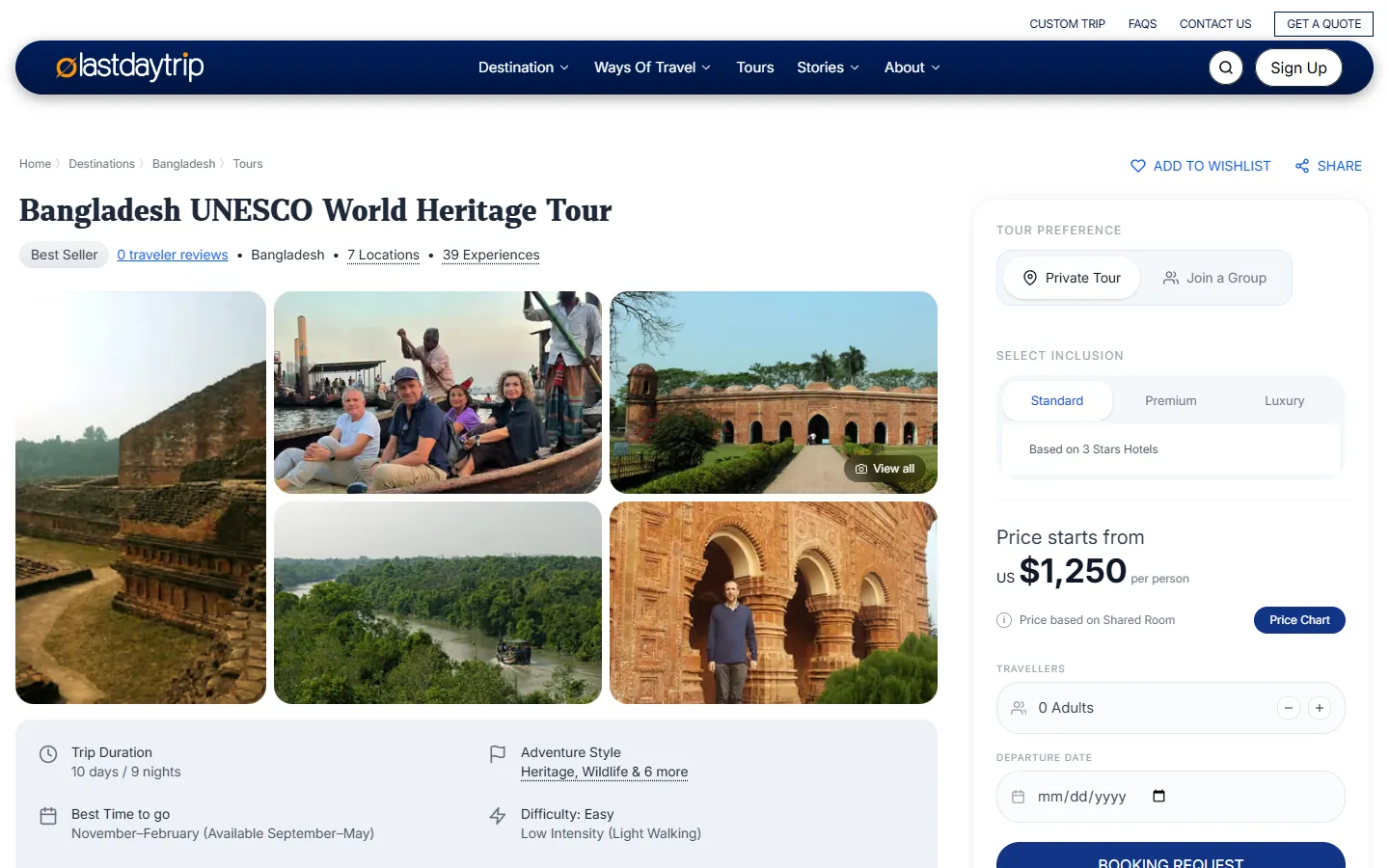
A tour company's site for Bangladesh, rebuilt from a browser-rendered React app into one full-stack Next.js app that search engines can read and the team can run from its own admin.

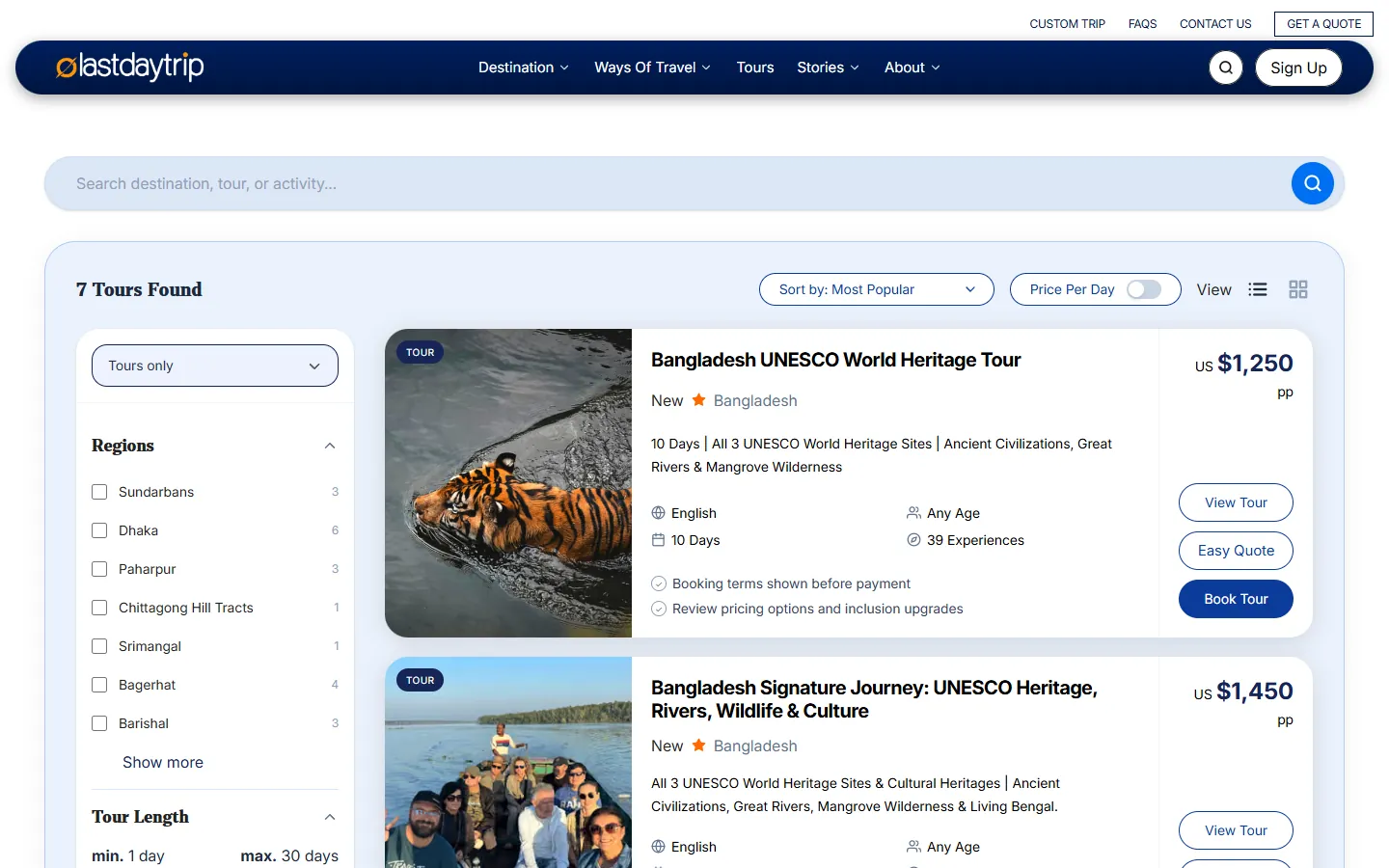
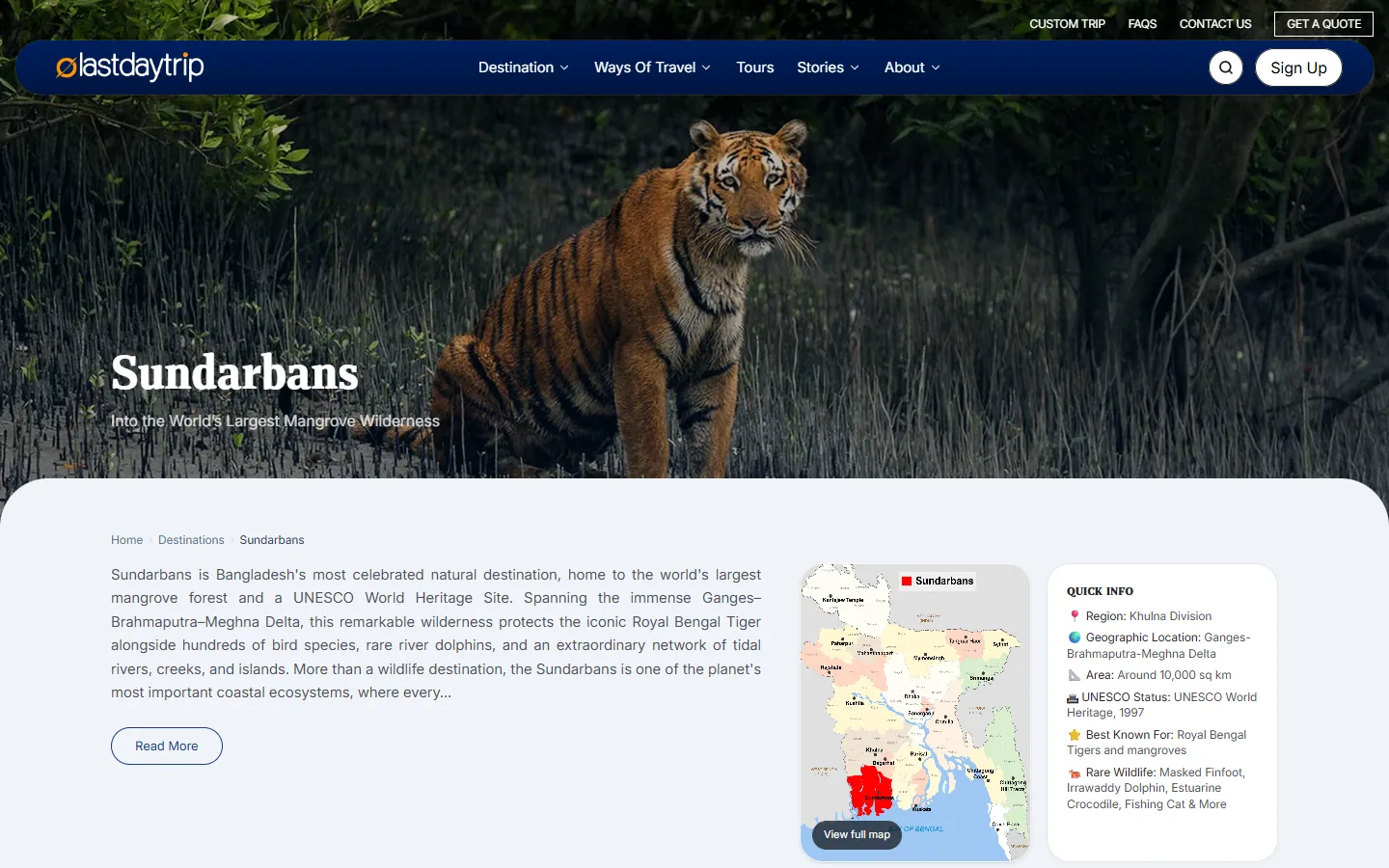
Last Day Trip sells private and group tours across Bangladesh. Visitors browse destinations, tours, activities and travel stories, then send a booking request that the team follows up.
The first version was a React single-page app with a separate API. Pages were assembled in the browser after loading, which is a weak start for a business that depends on people finding tours through search. The client also wanted SEO tools they could manage themselves.
The separate API moved inside the Next.js app. The frontend kept its API calls unchanged, and server-rendered pages call the business logic directly instead of making a network request to a second server.
Catalogue pages are cached. When staff publish a change, the affected pages refresh right away instead of waiting for a timer. Login, booking and account pages are never cached as shared content.
The SEO workspace in the admin and the SEO section inside each content editor read and write the same records, so there is no second SEO system to drift out of sync.
Cards were downloading photos far larger than the space they filled. Sizing each image to its slot and serving modern formats made photo downloads much smaller.